Kabuto (01)
Case study
↓
Project Overview
KABUTO (01) — Archetypal Deconstruction: From Museum Artefact to Spatial System
The Brief
To explore the scalability of a singular cultural icon across a multi-platform visual ecosystem. The project serves as a technical benchmark for the studio, testing the transition of complex geometry from archival research to high-fidelity motion and large-scale spatial intervention.
The Process
The study originated at the British Museum's - Mitsubishi Gallery, focusing on the structural silhouette and symbolic weight of Edo-period armor. The workflow was divided into three strategic pillars:
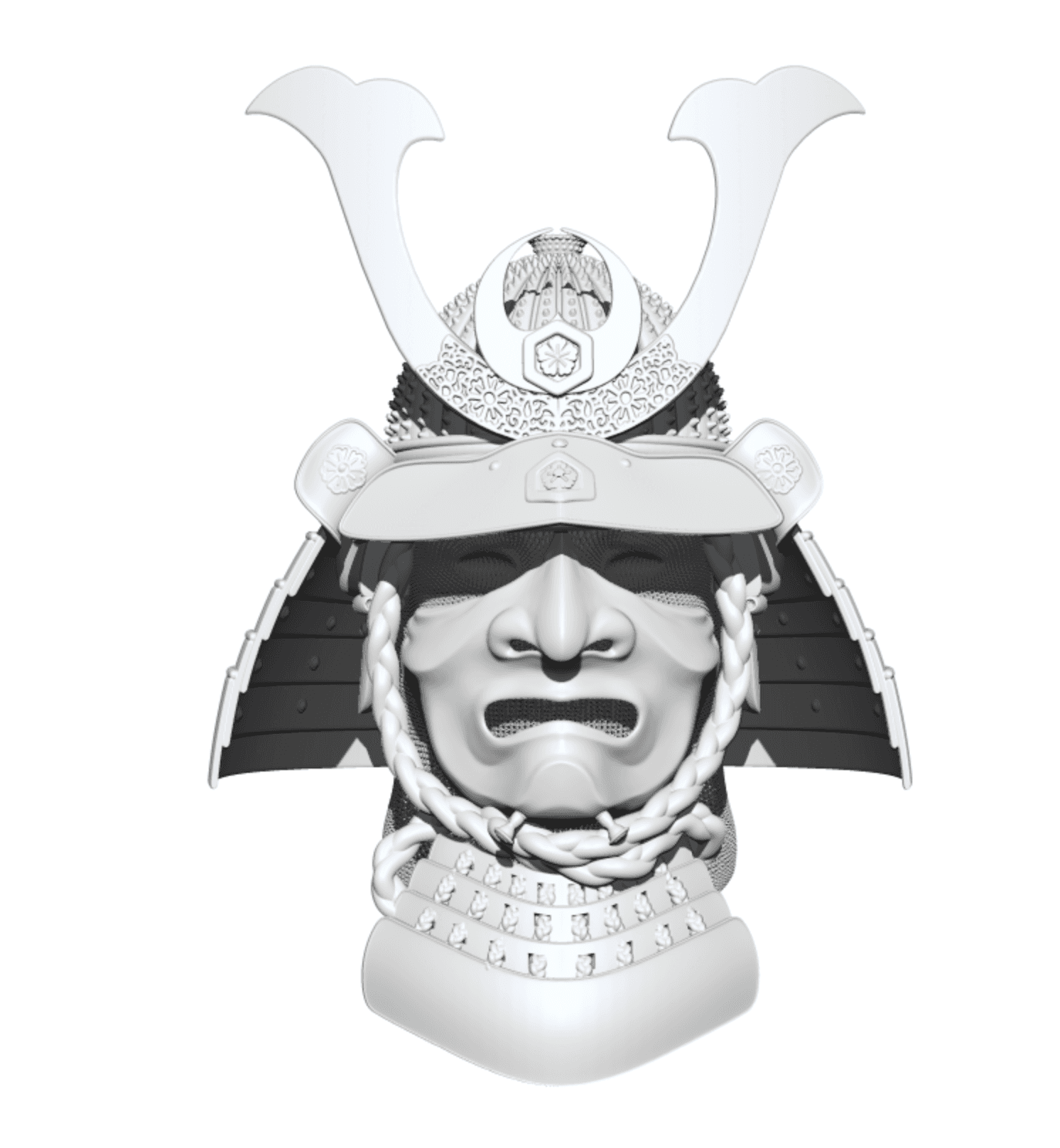
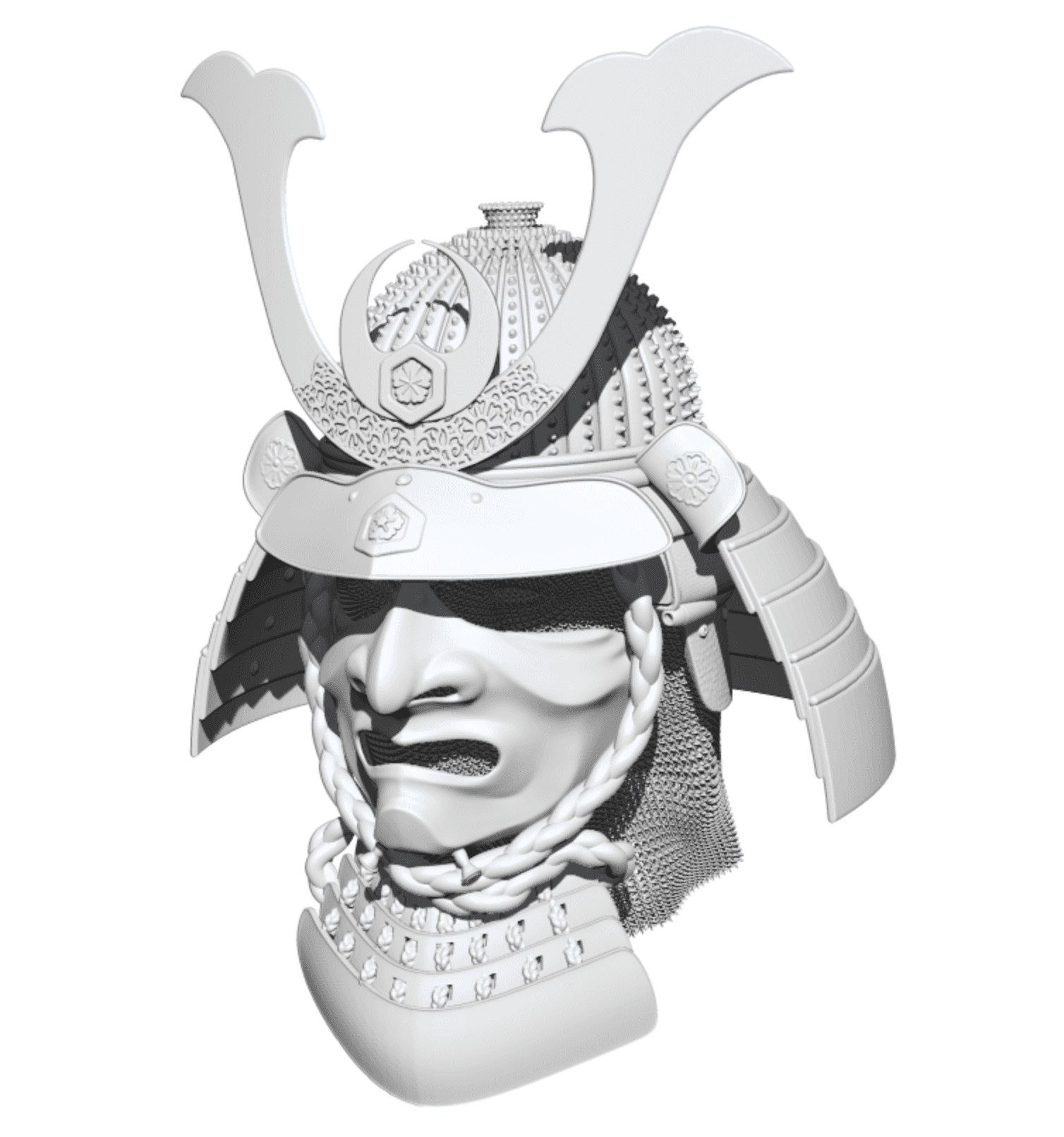
Precision Modeling: Translating hand-drawn observations into a high-density 3D base form, ensuring architectural integrity at every scale.
Material Research: A rigorous exploration of "Digital Craft"—developing custom shaders that replicate the visceral qualities of aged iron, hand-stitched silk, and traditional Japanese lacquer.
Systemic Iteration: Stress-testing the asset across divergent environments, shifting the object’s identity from a historical relic to a contemporary sculpture.
The Ecosystem
Rather than a static deliverable, KABUTO resulted in a modular visual system:
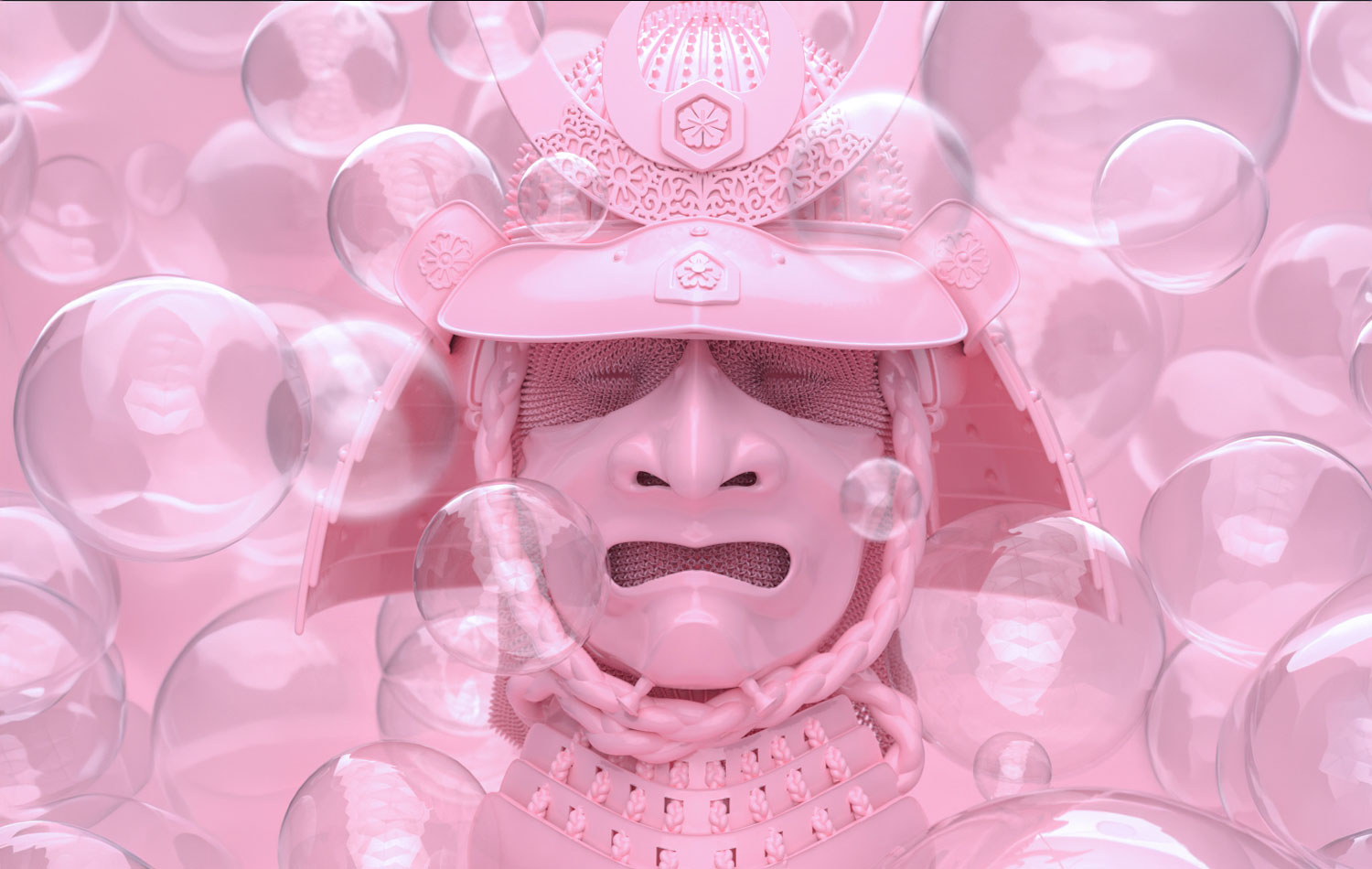
CGI Motion: A series of atmospheric sequences emphasizing macro-detail and cinematic lighting.
Architectural Intervention: The application of the 3D form to a stacked-container mural, proving the concept’s durability in a physical, industrial context.
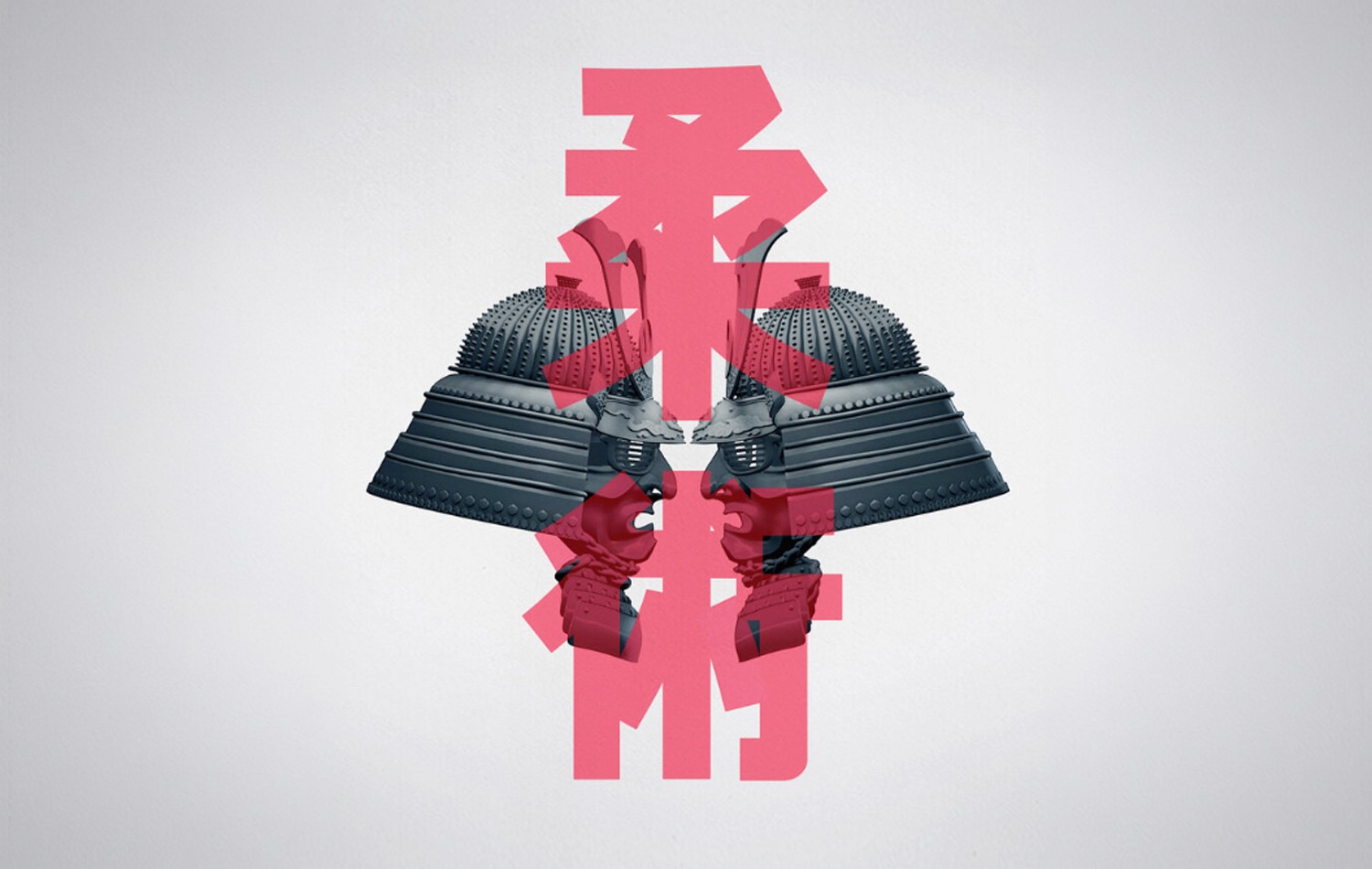
Print Series: High-resolution compositions designed for large-format gallery installation.
Strategic Outcome
KABUTO demonstrates the studio’s ability to take a singular conceptual spark and expand it into a cohesive brand world. It proves that with a research-led approach, a single asset can maintain its impact — whether viewed on a handheld screen or as a 10-meter physical installation.
Client
Kabuto (01)
Services
Motion Guidelines
Art Direction
Development